Leaders often make the mistake of checking the boxes on gender and race for diversity and inclusion, but diversity is much more than those identities.
When we talk about workplace culture and intersectionality, we move beyond the surface idea of diversity to deeper identities that often coincide with each other. Intersectionality is a paradox. A “both and.”
Inclusion isn’t a destination—it’s a journey of continuous pivoting. To truly address intersectionality, we must look at the layers of identity that make us who we are. It’s not just about being a woman or being a person of color; it’s about how those identities (and many others) overlap to create unique barriers—and unique strengths.
If you’re ready to move from performative DEI to a culture where everyone feels seen, heard, and belongs, here are three ways to pivot your approach.
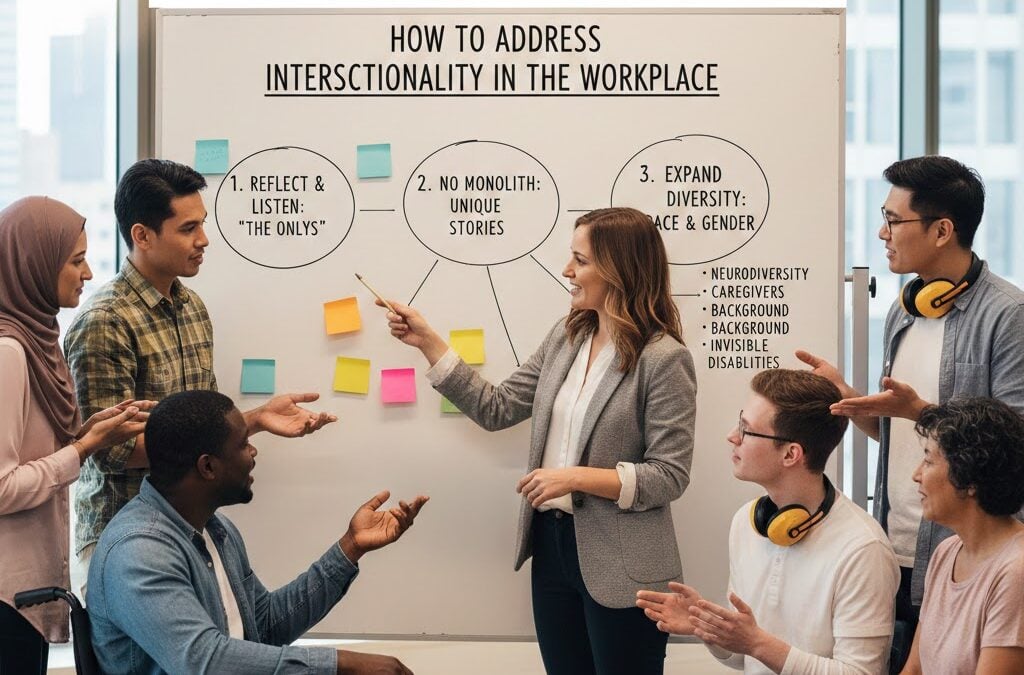
1. Reflect on the “Onlys”: Who is Overrepresented and Underrepresented?
To build an intersectional lens, we first have to get honest about the landscape of our organizations. I often talk about the “Onlys”—those who are the only ones like them in the room. When I spent 12 years in corporate America, I was frequently the only woman in the room. But I also recognized my own white privilege; while I was a “gender only,” I wasn’t a “race only.”
Take a hard look at your leadership table. Who is overrepresented? Often, it is those with the most identities of privilege—white, able-bodied, cisgender men. Then, look at who is missing or underrepresented. Is it women of color? Is it people with disabilities? Is it those from the LGBTQ+ community?
Intersectionality teaches us that when we focus only on one dimension—say, gender—the benefits often flow to the most privileged within that group (white women). By reflecting on who is truly underrepresented, we can practice allyship for the most marginalized first. As I often say, when we solve for those at the farthest margins, we create a curb-cut effect that makes the workplace better for everyone.
2. Recognize That No Group is a Monolith
One of the biggest mistakes leaders make is treating a demographic group as a monolithic block. “We have a program for women,” or “We’re doing a session for our Black employees.” While these intentions are good, they ignore the reality that no identity is a monolith.
A Black woman’s experience in your workplace culture and intersectionality journey is vastly different from a white woman’s or a Black man’s. A veteran with a disability has a different perspective than a non-disabled veteran. When we assume that one person can speak for an entire group, we perpetuate stereotypes and miss out on the rich diversity of thought that drives innovation.
As allies, we need to stop making assumptions. Instead of assuming you know what a specific group needs, start by listening. Use listening sessions to hear the lived experiences of individuals. Ask questions like, “What is one thing about your identity that people often misunderstand?” This helps us see people as the complex, multi-layered individuals they are, rather than a checkbox on an HR report.
3. Expand Your Definition of Diversity
If we want to build a truly inclusive future, we must broaden the umbrella. While race and gender are critical pillars, they are not the only factors in diversity. To foster a sustainable culture, we must expand our definition to include:
- Neurodiversity: Are we creating environments where ADHD, autism, and different cognitive styles are seen as superpowers rather than hurdles?
- Socioeconomic Background: Does our culture reward those who had the coveted internships or attended certain schools, or do we value the grit and perspective of first-generation professionals?
- Caregiver Status: Whether it’s a parent or someone caring for an elderly relative, these identities shape how people show up to work.
- Invisible Disabilities and Chronic Illness: Just because you can’t see a struggle doesn’t mean it isn’t there.
When we expand the definition of diversity, we realize that everyone has a diversity story. This doesn’t mean we water down the focus on systemic racism or sexism; rather, it means we acknowledge that we are all complex beings with overlapping identities.
The Pivot Point: Moving Toward Action
Inclusive leadership is about courage over cowardice. It’s about standing up for your values even when it’s uncomfortable. Intersectionality can feel murky—I used to say it was like dancing in the dark—but the more we practice, the more the light comes on.
Ask yourself: How can I use my privilege today to amplify a voice that is currently unheard? How can I challenge a policy that treats a group as a monolith?
By centering workplace culture and intersectionality, we don’t just hit a metric—we build a place where people can finally stop covering their true selves and start bringing their full brilliance to the table.
Are you ready to make the pivot? Let’s lead like allies, together.
Your Next Pivot Point
Are you ready to stop checking boxes and start changing systems? The future is inclusive, and you don’t want to be left behind as a future leader. That is why I offer a free allyship training for you and/or your organization by subscribing to our weekly, no-spam newsletter. You can catch new thought leadership in my Allyship in Action podcast interviews, too.