
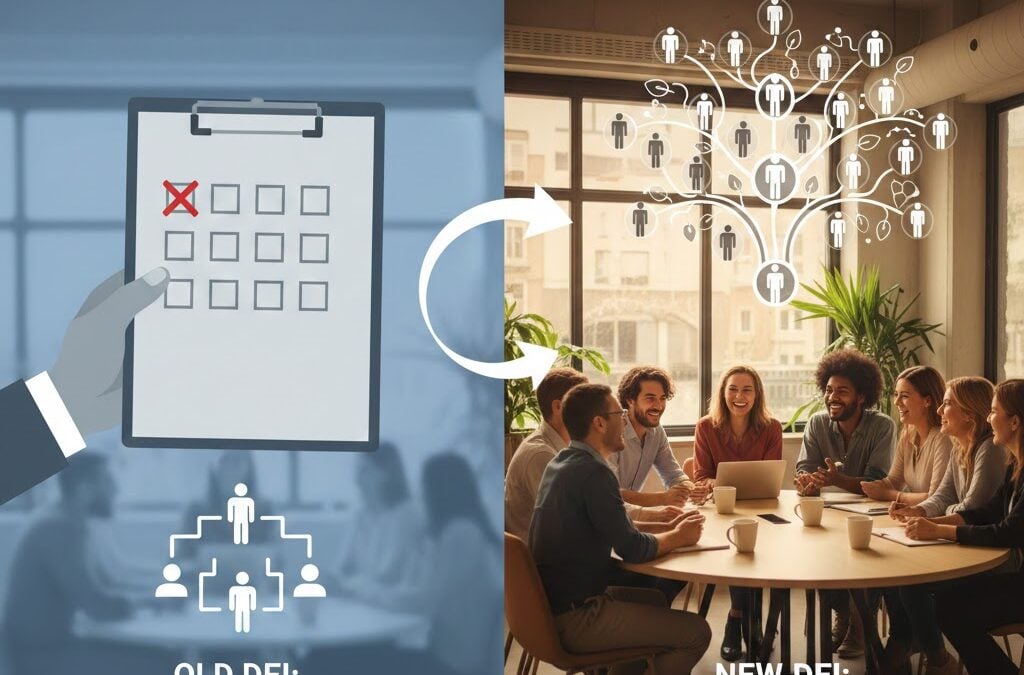
For years, many organizations treated Diversity, Equity, and Inclusion (DEI) as a “nice-to-have” project or a series of one-off events. We’ve seen the unconscious bias training sessions that led to little change, the celebratory heritage months that felt more like performative marketing than true community building, and the frantic hiring bursts that lacked the foundation to actually retain diverse talent.
But the tide is shifting. We are entering a new era of DEI—one that is more resilient, more strategic, and more integrated into the very fabric of how we do business. To build a workplace culture that truly thrives, we must pivot away from the superficial and lean into the sustainable.
The future of DEI isn’t about doing more things; it’s about doing the right things. Here is how we pivot forward effectively.
Systems Over Individual Tactics
For too long, we’ve put the burden of inclusion on the individual. We told marginalized employees to lean in, to find mentors, or to be more resilient. We told managers to simply “be less biased.” While individual behavior matters, it is the system that ultimately dictates the outcome.
If your hiring process relies on culture fit and informal referrals, you will continue to hire people who look and think like you, regardless of how many bias training sessions your team attends. If your promotion criteria are opaque and rely on proximity to power, you will continue to see a bottleneck at the mid-management level for historically marginalized talent.
The future of DEI is about systemic redesign. It’s about auditing the employee experience—from how we scout talent to how we conduct exit interviews—and identifying where the leaks are in our equity bucket. When we prioritize systems over individual tactics, we create a workplace culture where inclusion is the default, not an elective. We stop asking people to navigate a broken system and start fixing the system so it works for everyone.
Reflect on what systems are fair or unfair in your organization (hiring, promotions, pay) and how you fix them.
Focus on Business Impact
There has been a lot of noise recently questioning the perceived value of DEI. My response is always the same: if you don’t see the value, you aren’t looking at the data. DEI is not a charitable endeavor; it is a business imperative.
In a global economy, diversity of thought and perspective is your greatest competitive advantage. Teams that are inclusive are more innovative, better at problem-solving, and more attuned to a diverse customer base. However, to secure the future of these initiatives, we must get better at measuring and communicating their impact on the bottom line.
This means moving beyond vanity metrics like headcount percentages and attendance at Employee Resource Group (ERG) programs. We need to look at retention rates of diverse talent, the innovation scores of inclusive teams, and the market share gained by reaching new demographics. When we connect DEI goals directly to business outcomes—like reduced turnover costs or increased employee engagement—it ceases to be an “extra” budget line item. It becomes a core strategy for growth. Inclusion is the fuel that drives high-performance cultures.
Ask, what is the return on investment of diversity and inclusion?
Re-engaging Senior Leaders
We’ve reached a point of DEI fatigue in many C-suites. After the heightened awareness of 2020, some leaders felt overwhelmed or retreated when the initial momentum slowed. But the future of DEI depends on moving senior leaders from supportive bystanders to active allies.
To re-engage senior leadership, we must change the conversation. DEI is not about policing language or assigning blame; it’s a leadership competency to engage all humans at work. A leader who cannot manage a diverse team or foster an inclusive environment is simply not complete in today’s global and hybrid world.
We need to empower executives to own the DEI narrative. This involves providing them with the tools to have courageous conversations and the permission to be uncomfortably curious. When leaders see DEI as a tool to solve their biggest headaches—talent shortages, disengagement, and stagnant innovation—they reengage with purpose. Senior leaders must realize that their legacy won’t just be the numbers they hit, but the workplace culture they built and the barriers they broke down for those coming up behind them.
Consider asking senior leaders, what would our organization achieve with more diversity and inclusion?
Your Next Pivot Point
Are you ready to stop checking boxes and start changing systems? The future is inclusive, and it’s time we built it together. Let us do this together. Check out our “Top 10 Inclusive Leadership Pivots for 2026” and be sure to get a free allyship training for your organization by subscribing to our weekly, no-spam newsletter.
It’s time to stop waiting for permission and start taking action. What’s your next pivot? Schedule time to brainstorm for 2026 here.