
I recently sat down with Minette Norman and Dr. Karolin Helbig, the brilliant minds behind The Psychological Safety Playbook, who just released their groundbreaking follow-up, The Psychological Safety Playbook for Changemakers. I’ve been using the phrases and tools from their first book in my own training sessions for years. But this new playbook takes it to the next level. It’s not just a list of concepts. I am a big fan of the deeply practical facilitation guides on how to handle skepticism, roadblocks, and real-world pressures.
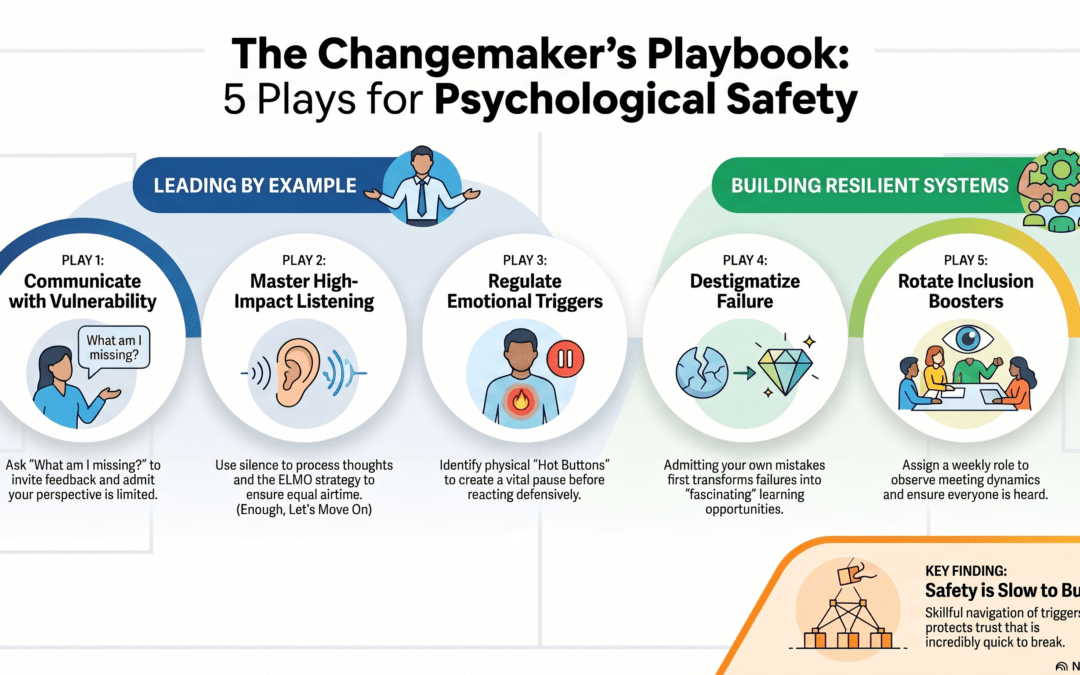
Minette and Karolin break down their framework into Five Plays. Let’s dive into how you can use these five distinct strategies to bake psychological safety seamlessly into the culture of your organization.
Play 1: Communicate Courageously
When we think of courage, we often picture big, heroic acts. But in leadership, courage is much more about the willingness to be vulnerable. It’s about fighting the socialized urge that leaders must have all the answers.
One of my absolute favorite practical tips from their book is asking your team a simple, powerful question: “What am I missing?” Inviting your team to illuminate your blind spots takes real humility. It requires you to admit that your perspective isn’t the only one that matters. By stepping ahead despite feeling a little scared, you model the exact vulnerability you want to see from your team.
Play 2: Master the Art of Listening
We all think we know how to listen, right? It sounds so obvious, but as leaders and facilitators, it is exceptionally hard to do well. True listening requires a conscious commitment to the speaker, even when their comments challenge us.
Minette shared a beautiful insight about the power of silence. As leaders, we often feel terrified of empty airtime and rush to fill it. But allowing silence shows your team that you are truly processing what they’ve said. Listening is deeply tied to inclusion and belonging. When people feel heard and valued for who they are, they feel like they belong.
Changemaker Tip: Are you worried about a meeting running off the rails or a participant monopolizing the room? Use the ELMO strategy—Enough, Let’s Move On! Setting expectations early that you will politely interrupt to ensure equal airtime keeps the container safe and inclusive for everyone.
Play 3: Manage Your Reactions
We all get triggered. It’s a part of being human. But great leaders possess the emotional intelligence to recognize when they are being triggered before they react defensively.
Karolin suggests doing a Hot Buttons exercise with your team to reflect on what pushes your buttons. Equally important is paying attention to your physical signs. Does your face flush? Does your heart rate accelerate?
Your body gives you early warning signals. If you tune into them, you can introduce a vital pause between the trigger and your response. Because psychological safety is slow to build and incredibly quick to break, learning to navigate these moments skillfully protects the trust you’ve worked so hard to establish.
Play 4: Embrace Risk and Failure
Most leaders will say they are fine with failure, but real-world corporate pressures often tell a different story. When people are terrified of losing their jobs, they hide their mistakes.
To break this cycle, the most senior person in the room has to be the first to admit when they’ve messed up. We need to talk about what didn’t go well just as much as what did. This isn’t about finger-pointing; it’s about running toward an intelligent failure with curiosity. When something doesn’t go as predicted, a great leader stops and says, “How fascinating! What can we learn from this?”
Play 5: Design Inclusive Rituals
To make psychological safety sustainable, it can’t feel like an extra chore—it has to be baked into how we do work. Minette and Karolin suggest using Inclusion Boosters, which are simple, structural changes to your meetings.
Try introducing a rotating Inclusion Booster role in your team meetings. This person isn’t permanent; the role shifts every week so everyone gets a turn to observe. The Inclusion Booster’s job is simply to watch the dynamics of the room and ensure the team is sticking to its established agreements. They look out for things like:
- Who is taking up the most airtime?
- Who is being interrupted?
- Have we heard from everyone before someone speaks twice?
By rotating this role, every team member develops a sharper radar for inclusion, shifting the burden away from the leader and creating a self-sustaining culture of care.
Your Next Pivot Point
Are you ready to stop checking boxes and start changing systems? The future is inclusive, and you don’t want to be left behind as a future leader. That is why I offer free allyship training for you and/or your organization by subscribing to our weekly, no-spam newsletter. You can catch new thought leadership in my Allyship in Action podcast interviews, too.