
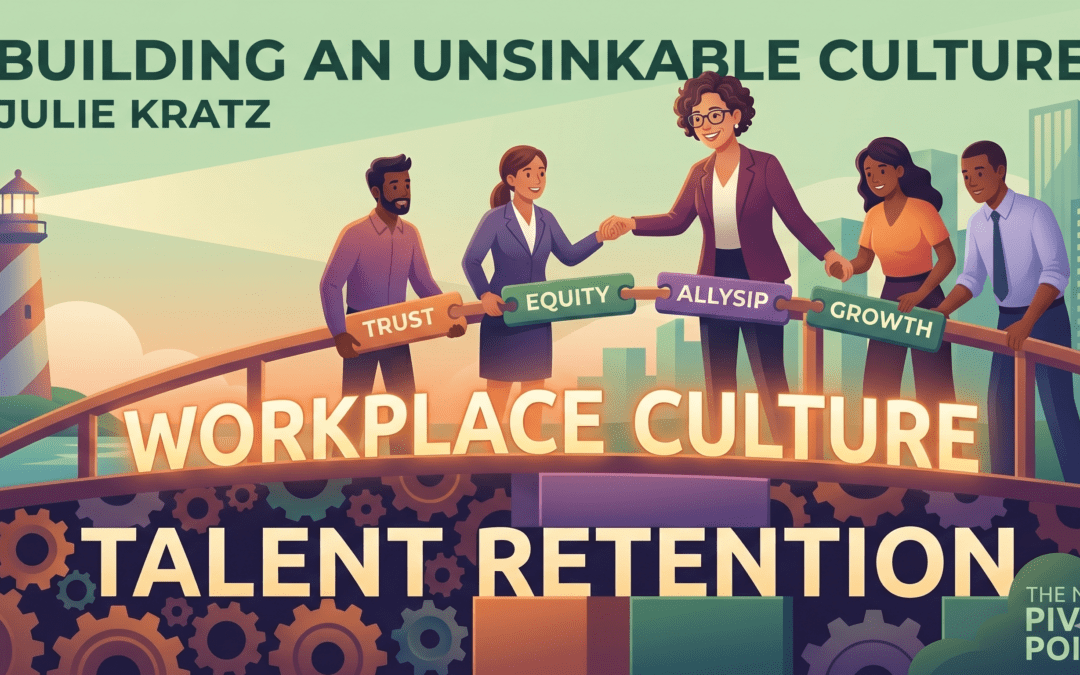
People are our most important asset. So what happens when leadership at the top changes? The problem isn’t usually a lack of vision—it’s a lack of intentionality during times of change.
When a major shift happens, employees look for signals. They want to know: Do I still belong here? Does the new leader value me? If you don’t answer those questions proactively, your best talent will find someone who will.
Here are three leadership lessons in times of leadership transition that every leader can use to pivot toward a more inclusive, sustainable future.
1. Build the Bench Before You Need It
Leadership transitions don’t happen overnight. They are the result of a thoughtful, long-term succession planning process. For most of us, succession planning feels heavy and perhaps even a bit scary—it forces us to confront our own replaceability. But in the world of allyship, developing others is the ultimate act of power-sharing.
At Next Pivot Point, we often say that inclusive leadership is the most sustainable competitive advantage. To keep your best people, you must show them a path forward. If your bench only looks and thinks like you, you have a systemic leak in your equity bucket.
The Pivot: Identify two or three high-potential people two levels deep in your organization. Ask yourself: What assignments, visibility, and relationships do they need in the next 18 months to be ready for more? When you invest in a diverse pipeline, you aren’t just planning for your exit; you are proving to your team that there is a place for them to grow. That is the heartbeat of talent retention.
2. Make Your Successor Visible Before the Big Reveal
One of the most common mistakes I see in Corporate America is the “Surprise! Here’s your new boss” announcement. This rattles confidence and sends the rumor mill into overdrive.
Visibility creates readiness, but more importantly, it creates buy-in. When we talk about workplace culture, we’re talking about trust. If you want your team to trust a new leader, they need to see that leader in action—modeling values, asking curious questions, and showing up as an ally.
The Pivot: Start sponsoring high-potential talent for meetings they wouldn’t otherwise attend. Let them present the strategy to the board or lead the quarterly all-hands. When you step back to let others step up, you aren’t losing power; you’re amplifying the collective strength of the team.
3. Define Exactly What You Stay to Do (and What You Don’t)
Often, leaders stick around. Role clarity is vital. The failure mode for many transitions is role ambiguity—where the old leader won’t let go, and the new leader can’t take hold.
In my work with organizations, I’ve found that when power is undefined, it creates shadow structures. Employees go back to the old leader for real permission, which completely undermines the new culture you’re trying to build. This confusion is a silent killer of engagement.
The Pivot: If you are transitioning, write down your Active Resistance list. What decisions will you intentionally not make? What meetings will you not attend? By setting these boundaries, you create the psychological safety that the new leader needs to lead and the team needs to follow.
Why Culture is the Ultimate Competitive Advantage
At the end of the day, a $4 trillion company and a 10-person nonprofit are governed by the same human truth: people want to feel seen, heard, and like they belong.
We’ve seen the one-and-done bias training and the performative heritage months. They don’t work. What works is a consistent, intentional commitment to systemic redesign. If your culture is built on a hero leader model, it will crumble the moment that hero leaves. But if your culture is built on allyship—where everyone is responsible for inclusion—it becomes unsinkable.
Sustainable talent retention happens when employees see that the organization’s values are bigger than any one person. When they see a transition handled with transparency and equity, they don’t just stay; they become fans of the culture and long-time fans of the brand.
Leadership is about courage over cowardice. It’s about standing up for your values even when—especially when—things are shifting. Whether you’re running a global tech giant or a local team, your legacy won’t just be the numbers you hit; it will be the workplace culture you built and the barriers you broke down for those coming up behind you.
So, I’ll ask you the same question we ask all our partners: What’s your next pivot? Succession planning isn’t about replacement—it’s about building an organization that is more capable than any single person in it. And that, my friends, is a leader worth following.
Your Next Pivot Point
Are you ready to stop checking boxes and start changing systems? The future is inclusive, and you don’t want to be left behind as a future leader. That is why I offer a free allyship training for you and/or your organization by subscribing to our weekly, no-spam newsletter. You can catch new thought leadership in my Allyship in Action podcast interviews, too.