
Equal Pay Day this year is March 26, 2026. The Equal Pay Day each year marks how many extra days into the new year women have to work to earn what men earned the prior year.
A new report from Glassdoor is a wake-up call for every leader who considers themselves an ally. The data shows a sobering reality. While the gender pay gap starts at roughly 12% for those entering the workforce, it widens to 19% just a decade in. But the most jarring finding? Women’s wages hit a definitive plateau around age 35, while men continue to see their earnings climb as they advance into senior leadership.
If you’ve been following our work, you know that I believe hope is not a strategy. We cannot simply hope that pay transparency laws or good intentions will fix a systemic issue that has been baked into the rules of Corporate America since the 1950s. To move the needle, we have to talk about why this is happening and how we, as allies, can pivot toward a solution.
The Myth of the Choice
When we see women’s careers stall in their mid-30s, the easy out is to blame caregiver responsibilities. We tell ourselves that women are choosing to step back. But let’s look closer. Is it a choice, or is it a structural failure?
When the rules of the workplace are defined by a rigid, always-on culture, we aren’t meeting women where they are. We are asking them to fit into a mold that wasn’t built for them. As I often say in my workshops, when the rules are co-defined by women, everyone thrives. When they aren’t, we see this 35-year-old plateau—a point where the lack of flexibility and the absence of inclusive leadership development programs create a glass ceiling that starts much earlier than many realize.
Moving from Intent to Impact
Even the best-intentioned policy could end up having the opposite impact. This is a core tenet of our training. Intent rarely matters as much as impact does.
You might have a mentorship program. You might have a DEI statement on your website. But if your mid-career women are looking at the leadership table and seeing no one who looks like them—or no one who balances life the way they need to—they won’t see a path forward. They don’t just need mentors; they need sponsors. They need allies with power who will mention their names in rooms they haven’t entered yet.
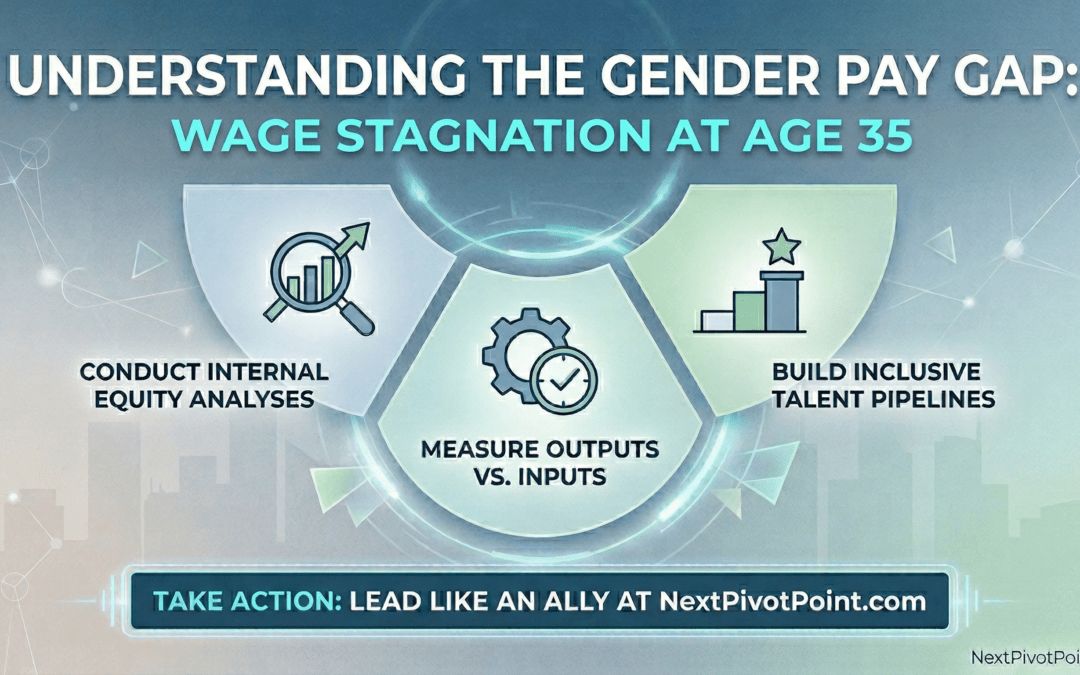
How to Pivot: 3 Actions for Allies
If we want to stop the stagnation of women’s wages and careers, we have to move beyond checking the box. Here is how we can lead like allies today.
1. Conduct an Internal Equity Analysis
In the current 2026 climate, some organizations are pulling back on proactive DEI reporting. Don’t be one of them. Allyship is about standing up for your values even when it’s hard. Work with your HR teams to look at the management gap. Are women being promoted at the same rate as men at that critical 10-year mark? If not, why?
2. Measure Outputs vs. Inputs
Flexibility is a competitive advantage. If your culture still prizes desk time over results, you are inadvertently penalizing caregivers. By measuring what people actually produce rather than when they are online, you create a culture of psychological safety where women don’t feel they have to hide their lives to be seen as leaders.
3. Build Inclusive Talent Pipelines
Look at your leadership development programs. Are they designed for people who have 60 hours a week to give, or are they accessible to your high-potential mid-career talent? We have to stop encouraging women to be more like men to succeed. Instead, we need to change the leadership criteria to value empathy, collaboration, and inclusive excellence.
Progress Over Perfection
The Glassdoor report reminds us that the pay gap grows to 25% after three decades. That is a staggering loss of talent and economic power.
But remember. Allyship is a journey, not a destination. We are going to bumble and stumble as we try to dismantle these systems. That’s okay. What isn’t okay is staying silent.
Let’s use this data as fuel. Let’s look at our 30-something female colleagues not as at-risk for leaving, but as the future of our organizations. It’s time to change the rules so that everyone—regardless of gender or age—feels seen, heard, and belongs.
Your Next Pivot Point
Are you ready to stop checking boxes and start changing systems? The future is inclusive, and you don’t want to be left behind as a future leader. That is why I offer a free allyship training for you and/or your organization by subscribing to our weekly, no-spam newsletter. You can catch new thought leadership in my Allyship in Action podcast interviews, too.