
Inviting allyship into conversations about diversity, equity, and inclusion (DEI) is not a new concept. In fact, Employee Resource Groups (ERGs) and DEI initiatives have always been legally and strategically designed to be inclusive of everyone. However, let’s get real: the current climate has changed the math. Between a polarized political landscape and a heightened sense of caution around identity politics, many leaders are hesitant. They are hovering their hand over the invite all button, unsure if they should actually press it.
When I talk to DEI practitioners and ERG leaders today, I hear a lot of valid, heart-centered anxiety. It usually sounds like this:
“We know we have to invite allies to programs, but we are afraid we are going to disrupt the ‘sacred space’ our members have worked so hard to build.”
“We’ve tried this before. It’s great when they listen, but it goes sideways the moment an ally starts centering their own experience over the marginalized voices in the room.”
“Allies simply don’t feel like our group is for them, so they just… don’t show up.”
I hear you. These aren’t just fears—they are observations based on past friction. But here is the truth: we cannot move the needle on inclusion if the people with the most systemic influence aren’t in the room. When I design and implement allyship programs, we don’t ignore these concerns. We use these concerns as the blueprint. We look at how allies have engaged in the past, how we want them to engage in the future, and we build a bridge to close that gap.
If you are ready to move past the empty chair syndrome, here is how we design allyship with intention.
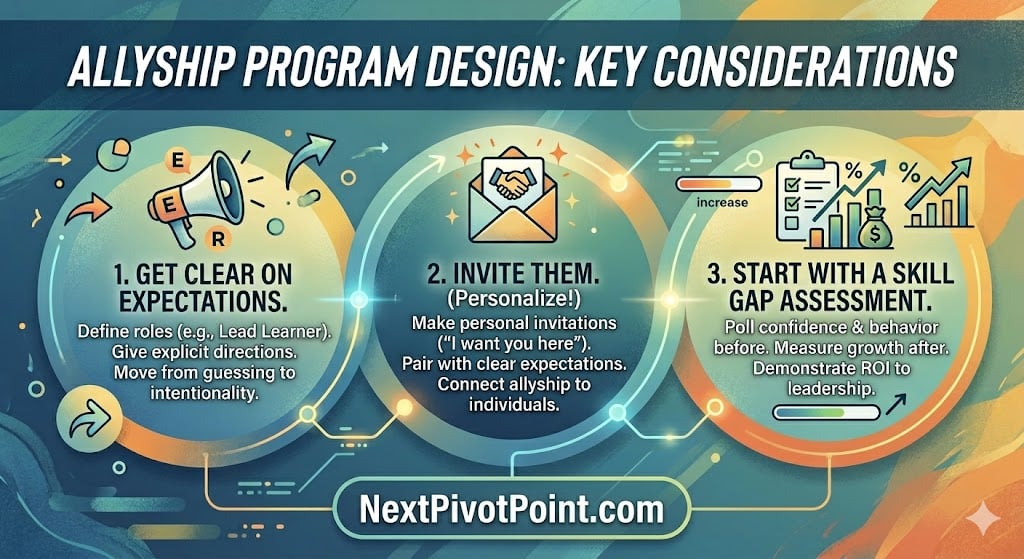
1. Get Crystal Clear on Expectations
Most people genuinely want to be better allies. The silence you see isn’t usually a lack of caring; it’s a paralyzing fear of doing it wrong. They don’t know the “rules” of the room, so they stay in the hallway.
As a leader, you have to provide the “Rules of Engagement.” As simple as it sounds, giving explicit directions goes a long way. Don’t just send an invite; send a guide.
Try this: “We are hosting a listening session. For our allies attending, your role today is to be a ‘Lead Learner.’ This means we ask you to come to listen, take notes, and hold your questions until the final 10 minutes. We invite you to be curious, but respectful of the lived experiences shared.”
When you define what “good” looks like, you take the guesswork out of allyship. You move them from passive observers to intentional participants.
2. The Power of the Personal Invitation
This sounds obvious, doesn’t it? But my research consistently shows that potential allies stay away because they feel like they are crashing a party they weren’t invited to. Even if the calendar invite says “All Employees,” a person in the majority group often thinks, “That’s not for me; I don’t want to take up space.”
We have to bridge that psychological distance. A mass email won’t do it, but a personal nudge will.
“I’d love for you to join this session because you’ve been such a great ally for me personally.”
“It’s important to me that you’re there to hear these perspectives.”
When you pair a personal “why” with those clear expectations we talked about, the likelihood of participation doesn’t just increase—it grows exponentially. Inclusion is built one relationship at a time.
3. Start with a Skill Gap Assessment
We often jump straight into the work without knowing where our starting line is. Before you launch your next allyship program, take a beat to reflect: What are the specific skills you wish your allies had? Is it inclusive meeting facilitation? Is it calling out microaggressions in real-time? Is it empathetic listening?
Create an anonymous survey to assess their current confidence and knowledge in these areas. This does two things:
- It creates a baseline: You stop guessing what they need and start teaching what they lack.
- It proves ROI: Conduct the same assessment after the programming. When you can show a 30% increase in “confidence in intervening during bias,” you have a story to tell.
I personally love asking senior leaders this question: “What is this specific skill improvement worth to our organization’s retention and innovation?” When you frame allyship as a measurable leadership competency, it stops being a nice to have and becomes a business imperative.
4. Protecting the Sacred Space
To address the biggest fear: yes, sacred spaces matter. You don’t have to invite everyone to every single meeting. Effective allyship programming often uses a tiered approach. You might have:
- Closed Sessions: For members of a specific identity to heal, vent, and connect.
- Open Sessions: For allies to join, learn, and commit to action.
The key is transparency. Tell your members why you are bringing allies in (to build support and drive change) and tell your allies why they are there (to learn how to support).
The Bottom Line
We are living in a time that demands more than performative allyship. We need allyship that is active, educated, and resilient. By setting clear boundaries, extending personal invitations, and measuring growth, we don’t just fill seats—we build a culture where everyone feels they have a role to play in equity.
The chair is empty. Who are you going to invite to sit in it?
Your Next Pivot Point
Are you ready to stop checking boxes and start changing systems? The future is inclusive, and you don’t want to be left behind as a future leader. That is why I offer a free allyship training for you and/or your organization by subscribing to our weekly, no-spam newsletter. You can catch new thought leadership in my Allyship in Action podcast interviews, too.