
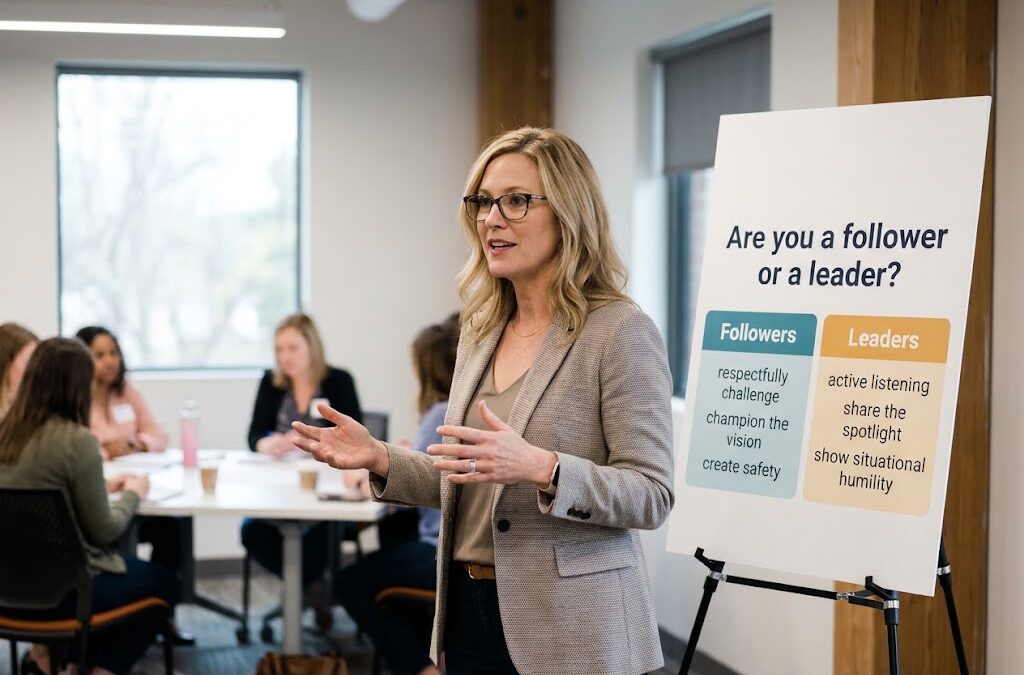
Traditional leadership had a linear career path to the corner office, emphasizing a need to take command and take charge. But if everyone is clamoring to be the leader, who is actually making the vision happen, checking for errors, and keeping the team running?
True leadership is a both and. It’s about being a leader and a follower. A need for inclusive leadership. Real progress doesn’t come from having a few charismatic voices at the top. It comes from intentional, collaborative partnership.
So when people ask, “Are you a follower or a leader?” they are asking the wrong question.
The real question is: Do you know when to step up, and do you know when to step aside?
Redefining Followership
For many leaders, being labeled a follower feels like a professional dead end. We associate it with compliance, complacency, or a lack of ambition. And often it is the first follower that shifts momentum for the leader.
In reality, active followership is an essential dimension of great leadership. Effective followers are not passive spectators. They are active collaborators who:
-
Challenge assumptions respectfully: They provide candor, speak truth to power, and point out operational blind spots before small cracks become systemic failures.
-
Champion the shared vision: They translate big-picture strategy into daily execution, ensuring that ideas don’t simply live on whiteboards.
-
Create psychological safety for others: By modeling trust, engagement, and accountability, they establish cultural norms that allow the whole team to thrive.
Without conscious, engaged followers, the most visionary executive risks doing it all alone.
The Pivot Toward Inclusive Leadership
True leadership is not defined by a fancy title, a salary band, or where you sit on an org chart. Leadership is an everyday practice rooted in empathy, vulnerability, and intentional action.
Inclusive leaders recognize that expertise isn’t concentrated at the top. They foster environments where every voice is heard, valued, and leveraged. That means:
-
Practicing Active Listening: Leaders who talk over others or monopolize the agenda stifle innovation. Leading often means sitting back, listening deeply, and allowing team members with direct lived experience to guide the conversation.
-
Embracing Situational Humility: A strong leader understands they rarely have all the answers. Stepping into a follower role within your own team, yielding the floor to a subject-matter expert regardless of their tenure, is an act of strength, not weakness.
-
Sharing the Spotlight: Inclusive leaders actively sponsor others. They don’t just mentor behind closed doors; they advocate for underrepresented colleagues, create visibility, and hand over the microphone.
When you view leadership through the lens of inclusion and alliance, the boundary between leader and follower dissolves. You realize they are two sides of the same coin.
The Power of the Dynamic Pivot
Think about your daily interactions. Are you fixed in one identity, or do you have the agility to shift roles depending on what the room requires?
Consider these everyday moments:
-
In a project kick-off: You might take the lead by setting the guiding values, aligning stakeholders, and clarifying boundaries.
-
During execution: You pivot into a supporting role, asking: “What barriers can I remove so you can do your best work?”
-
In moments of systemic change: You might step back entirely, following the guidance of grassroots employee resource groups (ERGs) who understand the cultural gaps firsthand.
This dynamic interchange is where genuine allyship and modern leadership intersect. Knowing how to follow with discernment and integrity is what prepares you to lead with empathy and clarity.
Four Ways to Practice Both And Leadership Today
To build a more collaborative and inclusive workspace, start integrating both practices into your routine:
-
Audit your speaking ratio. In your next team meeting, note how much time you spend declaring versus inquiring. If you hold organizational power, practice followership by asking open-ended questions and letting others drive the direction.
-
Celebrate courageous dissent. Acknowledge and reward team members who push back constructively. When a follower has the psychological safety to challenge a decision, the entire organization benefits.
-
Step up when silence takes over. Leadership isn’t always about directing strategy. Sometimes it’s speaking up against casual microaggressions or advocating for an equitable policy when others hesitate.
-
Normalize passing the baton. Actively look for opportunities to let emerging talent lead high-visibility client meetings or strategic initiatives while you provide quiet, supportive backup.
Moving Beyond the Binary
We must retire the binary mindset that separates thinkers from doers, commanders from obeyers, and leaders from followers. In an evolving, human-centered workplace, the most impactful professionals are those who balance both arts seamlessly.
Whether you are running an entire organization or managing your very first initiative, remember: leadership is a collective journey, not an individual pedestal. The next time you reflect on your role within your organization, don’t limit yourself to a single box.
Own your capacity to guide, cultivate your willingness to support, and lead with purpose every day.
If you liked this article, we have 40+ leadership workshops to help leaders tether being a leader and a follower.