
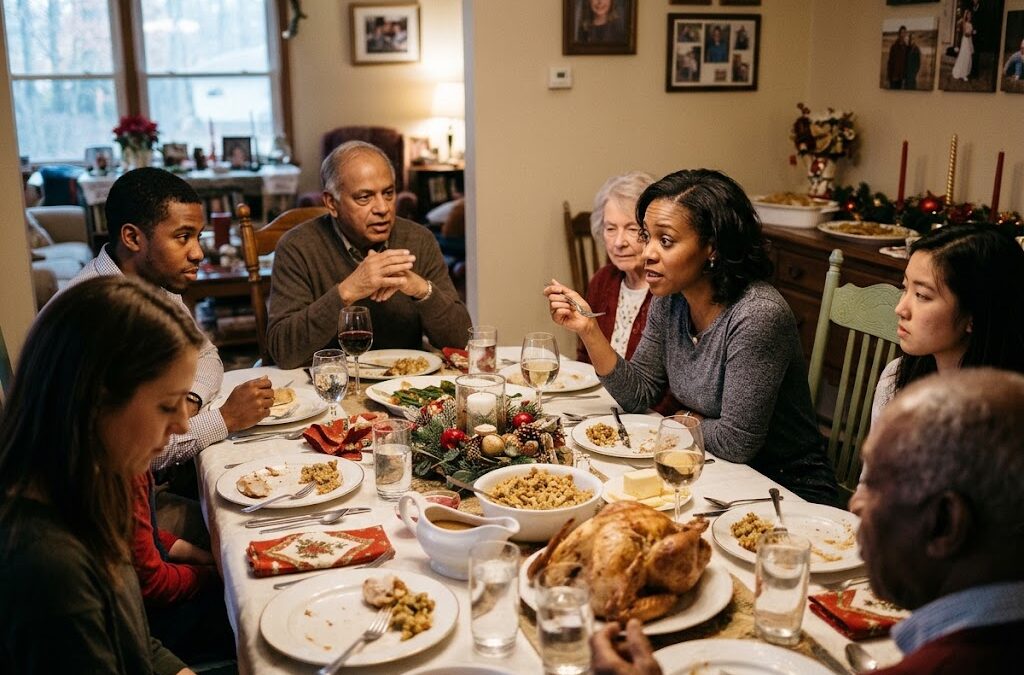
The holidays are meant to be a time for connection, celebration, and restorative downtime with the people we love. Yet, if you are like nearly half of all Americans, just the thought of gathering around the dinner table makes your heart hurt. Politics and hard conversations about different perspectives can be hard, especially with our families.
When weird things happen, you might be wondering: Do I call this out? Do I stay silent to keep the peace? Or do I slip away to help with the dishes?
Over the years, I have talked a lot about what it means to lead like an ally in the workplace. But allyship is not a badge you wear from 9 to 5 and leave at the office door. Inclusion is an everyday human practice. There is no tougher proving ground for our empathy, boundaries, and emotional intelligence than our own living rooms.
If you are preparing for holiday gatherings where political fireworks feel inevitable, here is how you can pivot from defensive reactions into intentional, inclusive boundary-setting.
Shift from Debate to Deep Curiosity
When politics surfaces, our default human reflex is to win the debate or correct the record. We want to whip out statistics, policy facts, or moral lectures. But here is the hard truth: nobody changes their deeply held political convictions in one conversation.
Debate puts people on the defensive. Curiosity invites reflection. When someone shares an opinion that makes your blood pressure spike, resist the urge to rebut. Instead, pivot with an open-ended question grounded in genuine curiosity:
-
“That’s an interesting take. What life experiences led you to see it that way?”
-
“What worries you most about that issue?”
-
“Tell me more about what you mean by that.”
Asking someone why they feel the way they do is not an endorsement of their views. Deep listening does not equal agreement. What it does is lower the polarization in the room and shift the conversation from talking points to shared human vulnerability.
Know the Difference Between Calling In and Calling Out
If a family member makes a comment that crosses the line into harm. Demeaning marginalized groups or perpetuating prejudice is not okay. Silence can feel like complicity, especially to younger relatives or vulnerable family members at the table.
This is where the allyship tool of calling in becomes essential:
-
Calling out is public, shaming, and often forces the other person into a defensive corner. It is usually more about our own ego than their growth.
-
Calling in invites the person into dialogue with grace and accountability.
You might say in the moment: “Hey Uncle Jim, we don’t use that kind of language in this house, but I’d love to understand what’s behind your frustration.” Or pull them aside one-on-one: “When you brought that up at dinner, it really stung. Can we talk through why that hits home for me?” Calling in preserves the relationship while refusing to let discriminatory language pass unchecked.
Establish Boundaries with Empathy
Inclusion does not mean you have to subject yourself to emotional volatility or hostility. Boundaries are not walls designed to punish others; they are guidelines that tell people how to love and respect you safely.
It is completely valid to set clear, compassionate boundaries before or during the gathering:
“I love this family and I cherish our time together so much that I want us to focus on catching up and celebrating tonight. Let’s agree to leave politics off the table for dinner.”
If someone continues to push the boundary, you don’t have to engage. A simple, calm pivot works wonders: “I hear that you feel passionate about this, but I’m going to pass on political debates tonight. Aunt Sarah, how has your community garden been doing?”
Practice Self-Preservation
As an inclusive leader, you might feel a lingering burden to fix your family dynamics. Give yourself permission to let that go.
Allyship requires psychological safety, which includes your own safety. If a conversation turns toxic, verbally aggressive, or harmful to your mental well being, taking a breather is not failure. Step outside for fresh air, take a walk around the block, or decide when it’s time to head home.
Inclusion is about meeting people where they are, while being clear on who you are and what values you stand for.
The Pivot Forward
This holiday season, remember that you are not there to fix every broken dynamic or win every election cycle argument in a two-hour dinner. You are there to model what brave, compassionate leadership looks like in real time.
Listen deeply when you have the capacity. Speak up with kindness and candor when dignity is at stake. Protect your peace when necessary. By showing up with clear boundaries and an open heart, you create the kind of belonging we all crave, both at work and at home.
If you liked this article, we have 40+ leadership workshops to help you navigate hard conversations at home and at work.