
Why psychological safety is critical for the workplace
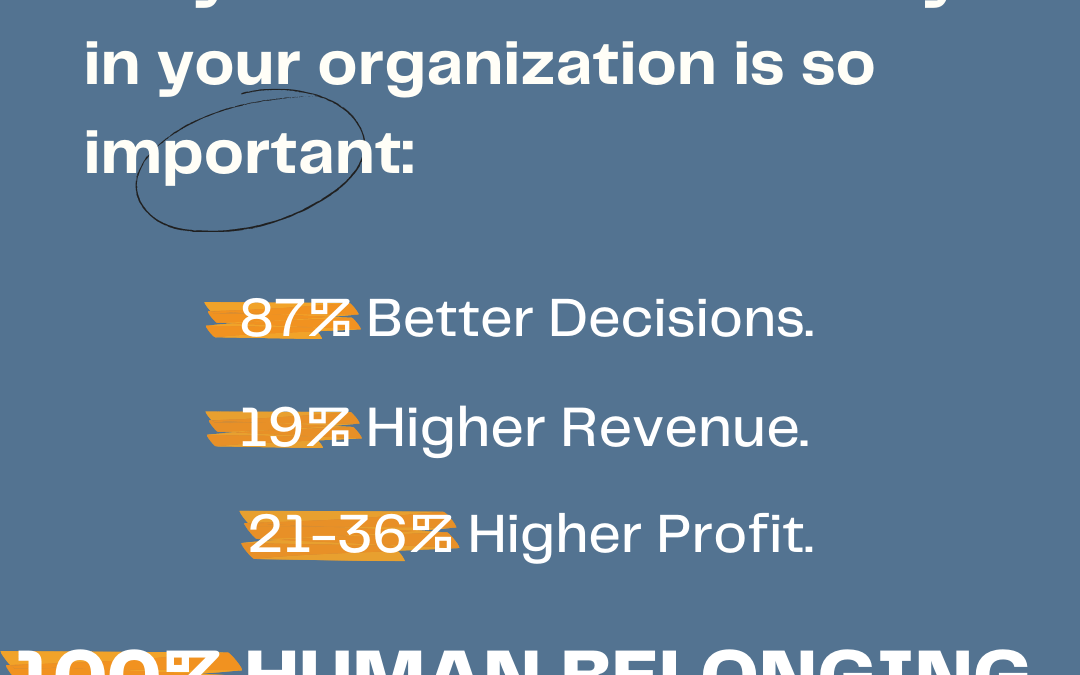
Whether your team is hybrid, fully remote, or in-office environments, diversity and inclusion is of foundational importance. Inclusive leaders recognize that being diverse and inclusive is not just a nice to have, it is a must have to be relevant to customers, employees, and the communities of which we serve long-term. If we do not strive to mirror who we hope to work with at every level of our organization, we risk not understanding and adapting to future needs. Organizations that are diverse and inclusive achieve higher rates of innovation, make better decisions, have higher revenues and profitability than their industry peers. There is a business case and human case for diversity and inclusion.
Psychological safety is important for diversity and inclusion to thrive in the workplace. Psychological safety can be defined as the ability to freely express yourself without the fear of retaliation. People that are of different racial identities, genders, or of diverse backgrounds generally report feeling less psychologically safe at work. If people don’t feel like they can fully express themselves and are having to cover or code switch to fit in with the dominant group, that is most often white male, there’s no way we’re getting the highest level of production, quality, or ideas from those individuals. By providing a psychologically safe workplace where people can feel seen, heard, and belonging, inclusive leaders set the tone for diverse talent to thrive.
Psychological safety definition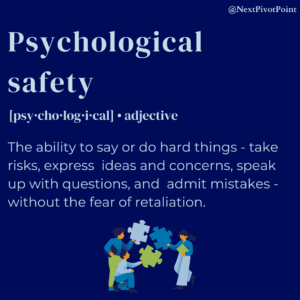
Inclusive leaders provide psychological safe environments for all employees
Inclusive leaders are emotionally agile, they’re open to feedback, and they adapt their approach to meet the needs of the team and organizations that they are a part of. By definition, diversity and inclusion is change – change to the status quo. We have to do things differently if we want to be different.
Psychologically safe work environments are possible with agility and adaptation, particularly during times of disruption and change
To be inclusive, leaders recognize that managing change is part of the process. And, change begins with them. Change doesn’t happen overnight. People have different comfort levels with change. Inclusive leaders are comfortable getting uncomfortable.
At the onset of the inclusive leadership journey, some leaders start out from a place of denial. This might be because they haven’t had the lived experience of people with diverse backgrounds. They may not be able to see what they haven’t experienced themselves. Once leaders accept that people have different lived experiences due to their race, gender identity, ethnicity, disability or background, the next step on the journey is resistance.
As with any journey there are bumps along the road. Resisting change and not wanting to change systems and processes that seem to be working for the majority can feel like extra work to make it work for all. After the trough of resistance, inclusive leaders model what they hope to see from the rest of the team and explore options for inclusion before ultimately committing to inclusion long-term. Inclusive leaders understand that diversity and inclusion is not a check the box, once and done activity or initiative, it’s a cultural transformation over time.
Allies self-reflect
Some key self-reflection questions to think about:
- Where are you on the change management model about diversity and inclusion – denial, resistance, exploration, commitment? Where is your organization?
- What do you think it will take to move to the next level, individually and as an organization?
- What motivates you for diversity and inclusion – the business case, human case, or other reasons?
- How psychologically safe is your work environment – rate on a scale of 1-10.
- What could you do to improve psychological safety?
Want to learn how to foster psychological safety at your organization?
Next Pivot Point offers custom solutions to meet your team where they’re at. Interested in learning more about how to foster psychological safety at your organization? Consider our Foster Psychological Safety workshop or any of our other 40+ virtual or in person workshops.